


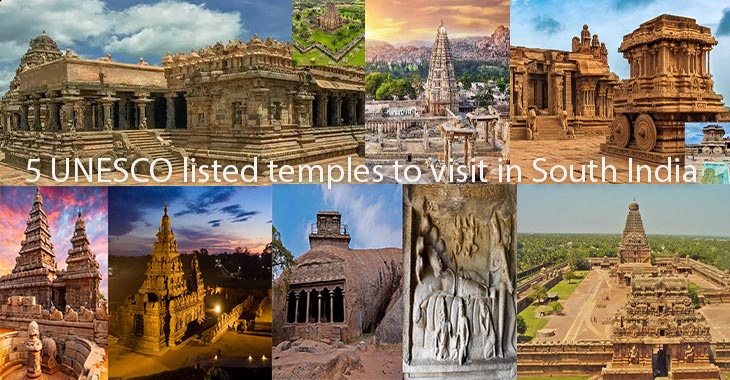
South India is frequently referred to as the “land of temples,” where art, spirituality, and history all coexist in stunning harmony. Some of its innumerable holy buildings have been recognized as UNESCO World Heritage sites due to their outstanding architectural and cultural value.
In addition to being significant religious sites, these temples are also long-lasting remnants of strong dynasties like the Cholas, Pallavas, and Vijayanagara kings, who turned devotion into architecture and stone into tales.
These 5 temples in South India are proud stewards of India’s architectural and spiritual legacy:
1. Vittala Temple, Hampi
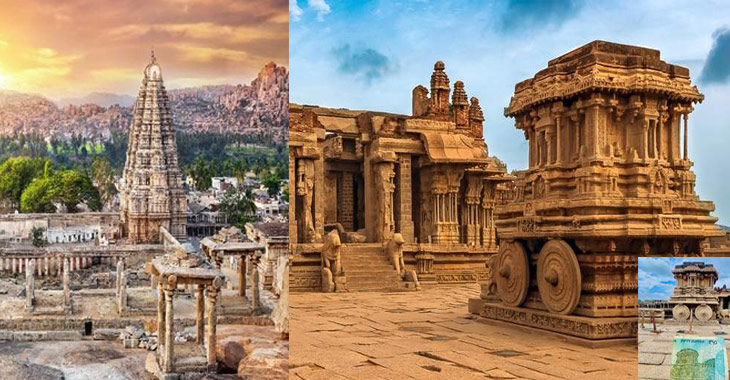
The Vittala Temple, a magnificent example of Vijayanagara architecture, is situated in the ancient ruins of Hampi. The temple, which is dedicated to Lord Vitthala, a manifestation of Vishnu, is well-known for its 56 musical pillars, which, when softly tapped, produce melodious notes. The British were so fascinated by this auditory marvel that they tried to cut two pillars to find the secret, but they were unsuccessful. Entry requires traditional dress, with ladies wearing sarees or chudidhars and males wearing dhotis and shirts. Morning prayers are held every day from 8:30 to 9:00 AM as part of the rituals.
The ancient landmark known as the Vittala Temple or Vitthala Temple in Hampi is renowned for its superb architecture and unparalleled craftsmanship. It is regarded as one of Hampi’s biggest and most well-known structures. The temple is situated close to the banks of the Tungabhadra River in the northeastern region of Hampi.
Amazing stone constructions, like the matchless stone chariot and the intriguing melodic pillars, may be found at the famous temple. Visitors and tourists must view this prominent monument of Hampi, which is one of the main draws of the abandoned town.
2. The Shore Temple
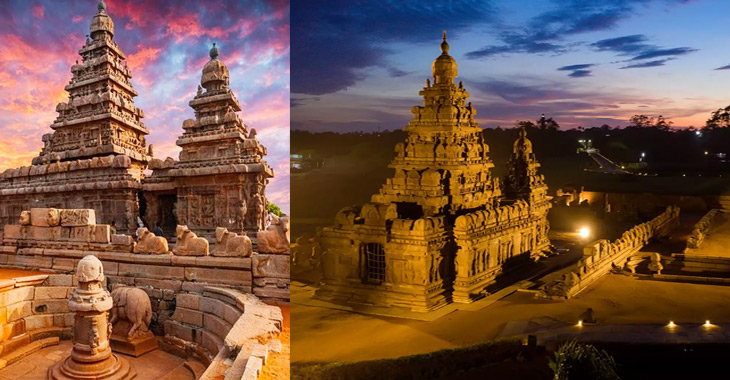
The Mamallapuram Shore Temple is one of the local temples and buildings that will truly astound you. The building is one of the earliest significant temples in South India and is thought to have been constructed during the time of Rajasimha/Narasimhavarman II, the ancient Pallavan ruler.
Narasimhavarman II, a Pallava ruler, constructed this famous 8th-century building in Chennai on the Bay of Bengal coast. It is devoted to Lord Vishnu and Lord Shiva. According to folklore, six of the seven temples that once stood together were destroyed by the sea as a result of Indra’s jealousy, leaving only the Shore Temple standing today. Even now, there is a lot of adoration at the temple, particularly during the festivals of Maha Shivaratri and Vaikunta Ekadashi.
The coastal temple was covered in sand until recently. Two sanctums make up the temple: one is devoted to Lord Shiva, and the other to Lord Vishnu. The temple, which was constructed using granite blocks and cut stones, embodies the spirit of Dravidian architecture. A dome and finial atop stepped levels make form a pyramidal Kutina-style tower. Along the other Mamallapuram temples and monuments, the Shore Temple complex was named a UNESCO World Heritage Site.
3. Airavatesvara Temple, Darasuram
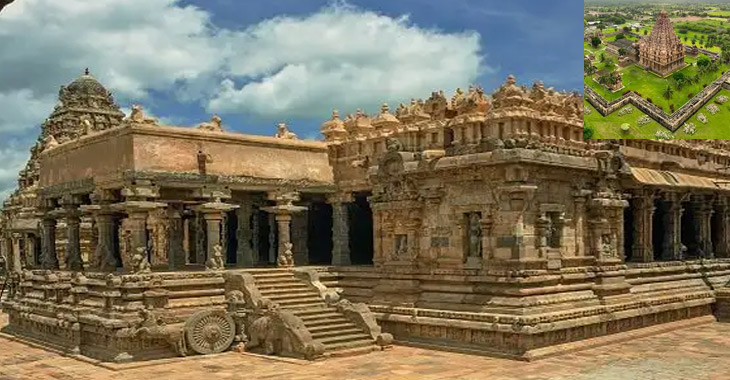
The Chola-style Hindu temple known as Airavatesvara Temple is situated in the Tamil Nadu state of South India’s Darasuram, a suburb of Kumbakonam, Thanjavur District. The Great Living Chola Temples, which include the Brihadeeswara Temple at Thanjavur and the Gangaikondacholisvaram Temple at Gangaikonda Cholapuram, were constructed by Chola ruler Rajaraja II in the 12th century CE and are listed as UNESCO World Heritage Sites.
The temple is famous for its elaborate carvings and chariot-like structure, and it is named after Indra’s white elephant, Airavata. The flight of musical steps that lead to the sanctum is its most intriguing aspect; each step has a unique note from the ancient Indian scale. Before entering the temple, devotees bathe ritually in the revered Surya Pushkarani tank. During celebrations like Mahashivaratri, the venue comes to life and attracts both believers and art lovers.
To the north of the Airavateshvarar temple sits this isolated temple. When the outer courts were finished, this might have been a component of the main temple. The main temple and its related shrines are now standing alone, while other elements of the temple, such the gopuram, are in ruins. It features two sun dials, one for the morning and one for the evening, which resemble the chariot’s wheels. While some of the statues, including those of Durga and Shiva, are part of special pujas, the temple nevertheless draws sizable crowds of Hindu visitors each year during Magha.
4. Mahishasuramardhini Mandapa
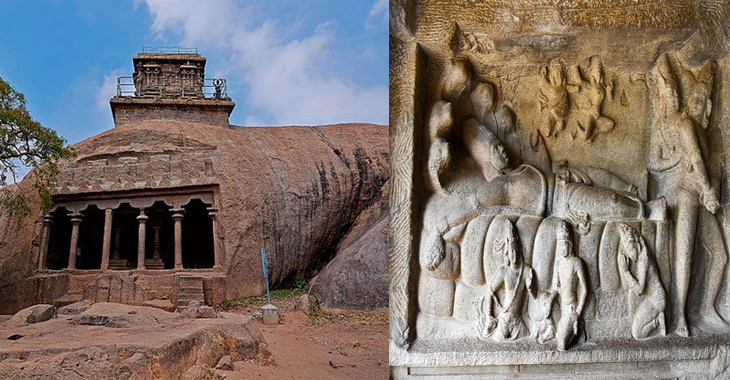
Mahishasuramardhini Mandapa (Cave Temple), also called Yampuri, is a prime example of Pallava dynasty rock-cut architecture from the late 7th century. In Mamallapuram, there are more caverns and a rock-cut cave temple on a hill next to a lighthouse. The Indian state of Tamil Nadu contains the small village of Mamallapuram, often called Mahabalipuram, which is located south of Chennai.
The temple is a part of the Group of Monuments at Mahabalipuram, which was listed as a UNESCO World Heritage Site in 1984. This wonder of rock-cut architecture is a superb illustration of Pallava architecture.
Shiva, Adisesha, and Vishnu resting on the seven-hooded snake are among the intricate sculptures found in the mandapa, which is carved into the hill at Mahabalipuram. Its main panel shows Goddess Durga killing the buffalo monster Mahishasura while in her ferocious incarnation as Mahishasuramardhini.
The core of God’s victory against evil is encapsulated in this spectacular scenario. Because the site is named for the triumphant goddess, visitors are advised to dress modestly out of respect for its sacredness.
5. Brihadisvara Temple, Thanjavur
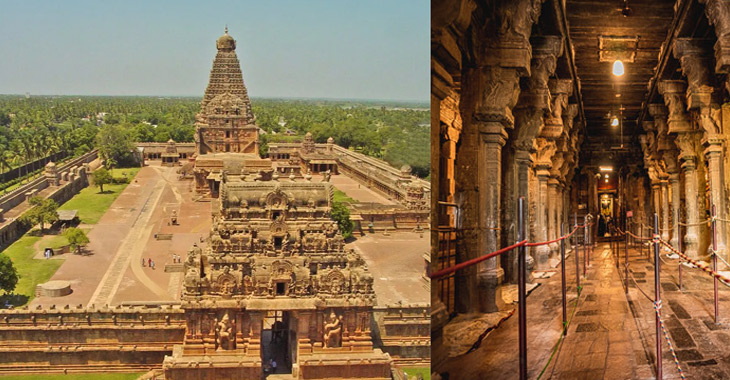
The Brihadeeswarar Temple is unique due to its enormous size, exquisite Dravidian design, and its enormous Vimana (tower), which casts no shadows. Constructed at Thanjavur in 1010 AD by the Chola dynasty, this UNESCO World Heritage Site showcases a massive monolithic statue of Nandhi, signifying the might and inventiveness of the Chola period.
This temple’s initial monuments were constructed around a moat in the eleventh century. The major temple, Gopura, its enormous tower, and sculptures, frescoes, and inscriptions, mostly associated with Shaivism but also with Vaishnavism and Shaktism, were all part of it.
The vimana tower atop the shrine is one of the tallest in South India and was constructed out of granite. The temple features one of the biggest Shiva lingas in India as well as a huge colonnaded prakara (corridor).
In addition to being the site of the 11th-century commission for the brass Nataraja, Shiva as the lord of dance, it is renowned for the excellence of its sculpture.





Leave a Reply