


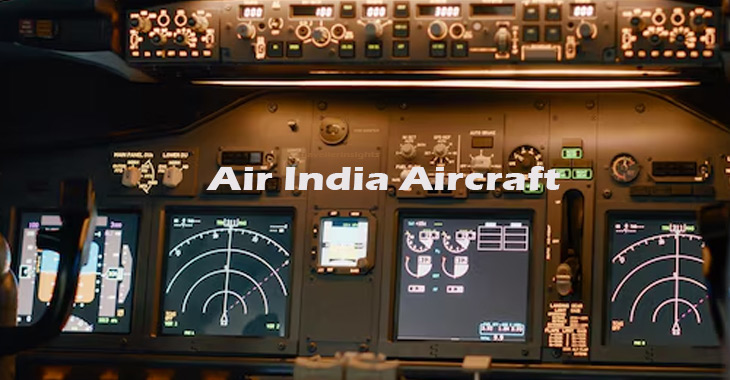
The Ministry of Civil Aviation responded to the news article about the alleged fuel cut-off switch malfunction on Air India’s Boeing B787-8 aircraft VT-ANX in London on Tuesday, stating that the fuel control switches on the aircraft were determined to be in good condition.
According to the rejoinder, Air India engineering noted that: “Both left and right switches were checked and found satisfactory, with the locking tooth fully seated and not slipping from RUN to CUTOFF,” based on the Boeing-recommended checks to determine the fuel control switch’s serviceability. The switch held in place when all of the force was applied parallel to the base plate.
However, because the angled base plate allows slip when pressed incorrectly with a finger or thumb, the switch moved readily from RUN to CUTOFF when external force was applied in the wrong direction.”
Furthermore, according to Boeing’s email, the pull-to-unlock force on the fuel control switch was verified using the suggested method on the fuel cut-off switch in question, the fuel control unit that would be installed, and the fuel cut-off switch of another aircraft. The pull-to-unlock force was confirmed to be within limits in every instance.
According to the ministry’s statement, these inspections were conducted with DGCA inspectors present.
After analyzing the video that is currently making the rounds on social media in light of Boeing’s recommended procedures, it was found that the procedure shown in the video is flawed.
According to the statement, the airline is being urged to provide its crew members with the Boeing-recommended protocol for operating the Fuel CUT OFF switch.
The Air India B787-8 aircraft VT-ANX flew flight AI 132 (London-Bengaluru) on February 1, 2026.
The crew noticed that when light vertical pressure was applied during engine start in London, the fuel control switch did not stay positively latching in the ‘RUN’ position on two separate occasions.
The switch successfully latched in ‘RUN’ on the third try and stayed stable after that. The team physically verified that the switch was fully and positively locked in the “RUN” position before proceeding with the remaining steps.
During the engine start or at any point following, no unusual engine characteristics, cautions, warnings, or associated system alerts were noticed.
For the duration of the flight, the crew kept a close eye on the engine indications and alerting systems, avoided making needless contact with the switch, and informed the operating crew member on the observation. The flight went off without a hitch.
The crew reported the PDR malfunction after landing in Bengaluru, and Air India submitted the issue to Boeing for more assistance.
The airline’s technical staff then performed the inspections in front of DGCA inspectors, according to the statement.

Leave a Reply