


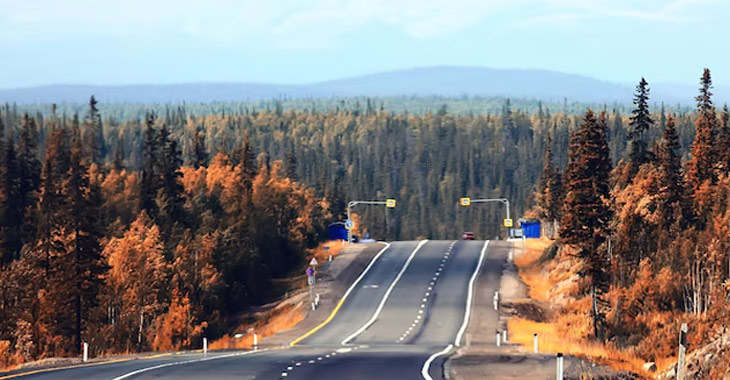
From the introduction of Bharatmala Pariyojana and the swift growth of the National Highway network to the construction of famous expressways at record-breaking speeds, India’s road infrastructure has undergone an unmatched transformation over the last 12 years, according to an official factsheet released on Sunday.
Bharatmala Pariyojana is one of the most significant initiatives in the road sector, with the goal of improving freight and passenger transportation around the nation.
By March 2026, 26,425 kilometers of projects had been granted, and 22,590 kilometers had been built. The programme, which was accepted by the Indian government in October 2017, calls for the creation of 34,800 kilometers of National Highway corridors at an estimated cost of Rs 5. 35 lakh crore, according to the factsheet published by the Ministry of Road Transport and Highways.
By lowering logistical costs and improving access to strategically important and remote areas, Bharatmala Pariyojana has significantly strengthened connectivity, promoting economic growth, regional balance, and national integration.
Over the previous ten years, one of the most notable infrastructure breakthroughs has been the growth of India’s National Highway system. The network has grown by close to 61% from about 91,287 kilometers in 2014 to over 1,46,572 kilometers in FY 2025–2026.
The rate has increased to almost 34 kilometres per day by 2025, from an average building rate of around 11. 6 kilometres per day in 2013–14. This outstanding expansion has enhanced interconnectivity between provinces and regions, expedited the transportation of goods and services, widened market access, and fortified the nation’s economic foundation.
The Delhi-Mumbai Expressway is one of India’s most ambitious motorway infrastructure initiatives. It will become the longest access-controlled motorway in the nation upon completion, with a projected length of roughly 1,386 kilometers and an estimated project cost of around Rs 1 lakh crore.
The expressway will significantly improve connectivity between the country’s main economic hubs by connecting Gujarat, Madhya Pradesh, Rajasthan, Haryana, Delhi, and Maharashtra.
On February 12, 2023, Prime Minister Narendra Modi opened the first finished part of the Delhi-Mumbai Expressway—the 246-kilometer Delhi-Dausa-Lalsot segment in Rajasthan, which was built for over Rs 12,000 crore.
On February 22, 2024, the 87-kilometer Vadodara-Bharuch section in Gujarat was opened following this. Then, on June 5, 2026, the Prime Minister opened two more Gujarat sections: the 27. 5-km Gandeva-Ena section and the 36-km Kim-Ena section.
Along its corridor, the project is anticipated to shorten travel time, enhance logistics efficiency, and create new chances for investment, employment, and industrial growth.
By making travel between Delhi and Meerut quicker, safer, and more effective, the Delhi-Meerut Expressway has revolutionised connectivity inside the National Capital Region. The Expressway, which spans around 82 km and cost about Rs 8346 crore to build, has significantly shortened travel times for both people and companies.
The Dwarka Expressway is a significant step forward in the growth of urban transportation infrastructure in the NCR. The project, which is approximately 29 kilometers long and cost about Rs 9,000 crore, has significantly improved connectivity between Delhi and Gurugram.
The Bengaluru-Mysuru Expressway has become a landmark infrastructure project in southern India. Prime Minister Narendra Modi opened the 118-kilometer Expressway on March 12, 2023. It cost about Rs 8,480 crore to construct. The project has reduced travel time between Bengaluru and Mysuru to roughly 75 minutes from approximately three hours.
The Delhi-Dehradun Economic Corridor exemplifies India’s commitment to creating an environmentally sound, quick, and effective National Highway network.
The Prime Minister opened the 213-kilometer six-lane access-controlled corridor, which was built for Rs 12,000 crore, on April 14, 2026.
The duration of travel between Dehradun and Delhi has been shortened from more than six hours to approximately 2. 5 hours by the corridor.

Leave a Reply